
 |
BioInfoMed’2026 Invited and Keynote Speakers
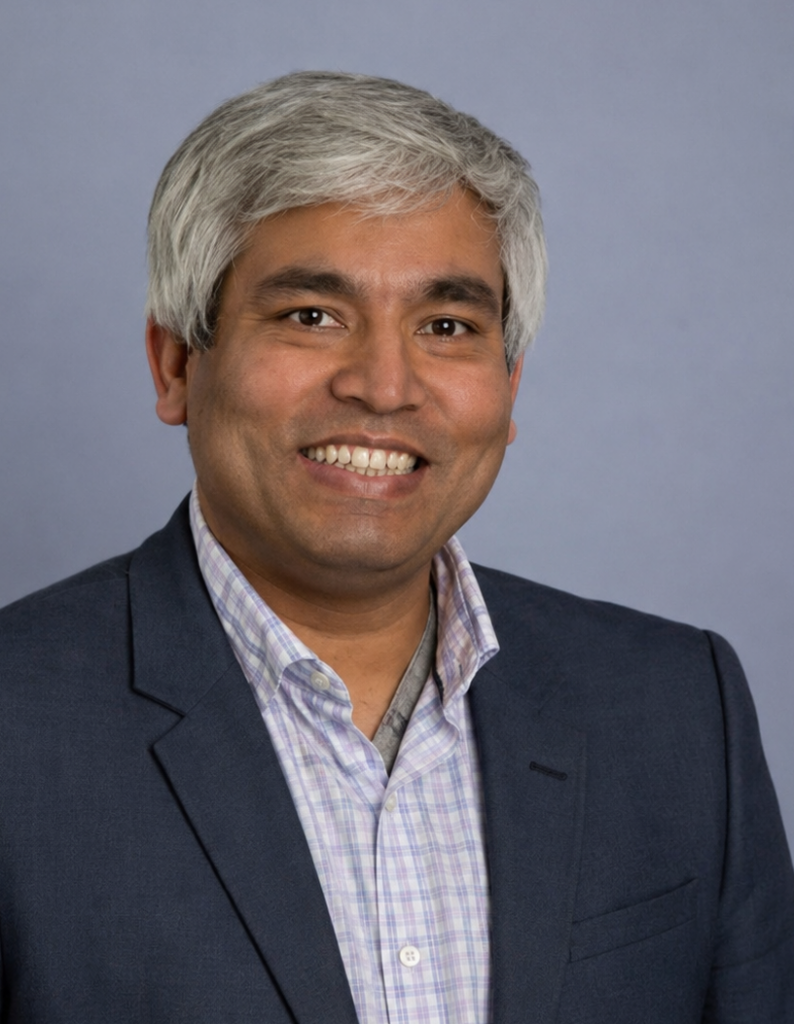
Keynote Speaker Associate Prof. Dr Chandan Karmakar (Australia)
School of Information Technology, Deakin University, Australia See also:
|
Abstract
Entropy-based measures, rooted in Kolmogorov–Sinai entropy, provide valuable tools for characterising the complexity and nonlinear dynamics of physiological time-series signals. However, conventional entropy measures are highly dependent on user-defined parameters, particularly the tolerance parameter, which can lead to inconsistent and potentially unreliable estimates. To address this limitation, we developed a data-driven entropy profiling approach that systematically quantifies entropy across the full range of tolerance values. Rather than representing a physiological signal by a single entropy value, the approach generates an enhanced entropy profile that captures the underlying complexity across different tolerance levels. This reduces dependence on parameter selection while enabling the extraction of secondary entropy descriptors from the profile. The proposed framework has been evaluated across diverse physiological signals and diagnostic scenarios, demonstrating its potential for robust nonlinear biomarker extraction and improved physiological characterisation.
Curriculum Vitae
Associate Professor Chandan Karmakar is a researcher in the School of Information Technology at Deakin University, Australia. He specialises in artificial intelligence, biomedical signal processing and digital health. His research focuses on the analysis of physiological time-series data and the development of machine-learning methods for health monitoring, clinical decision support and wearable technologies. His broader interests include pattern recognition, smart sensors, the Internet of Medical Things, data analytics and privacy-preserving health technologies.
He received his PhD from the University of Melbourne, Australia, where his doctoral research was in biomedical signal processing. He subsequently worked as a postdoctoral research fellow at the University of Melbourne before joining Deakin University as an Alfred Deakin Postdoctoral Research Fellow. At Deakin, he progressed through research and academic appointments, becoming Lecturer in 2018, Senior Lecturer in 2021 and Associate Professor in 2024.
His interdisciplinary research applies artificial intelligence and advanced signal-processing techniques to a wide range of biomedical and healthcare challenges, including electrocardiographic and electroencephalographic signal analysis, cardiovascular monitoring, sleep disorders, epilepsy, depression, diabetes and physiological fatigue. He has contributed extensively to international scientific literature, including more than 200 research articles.